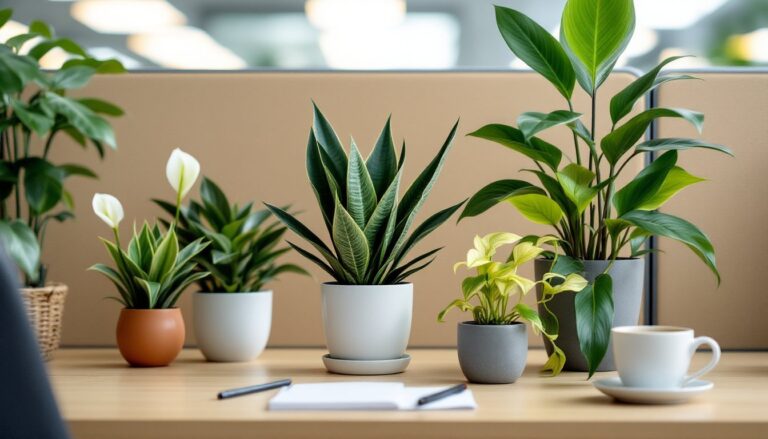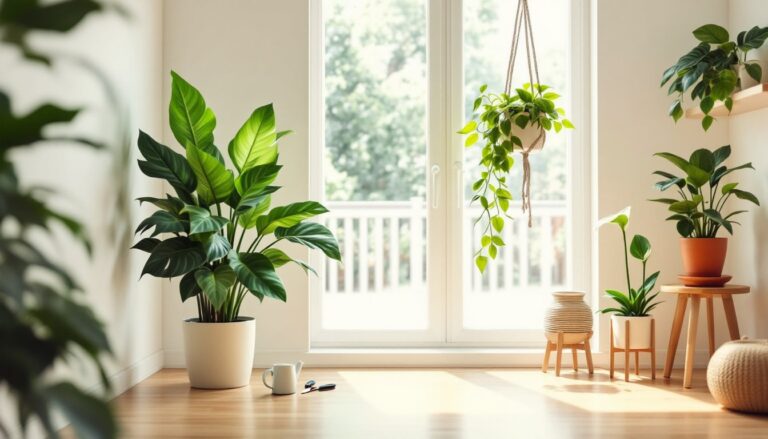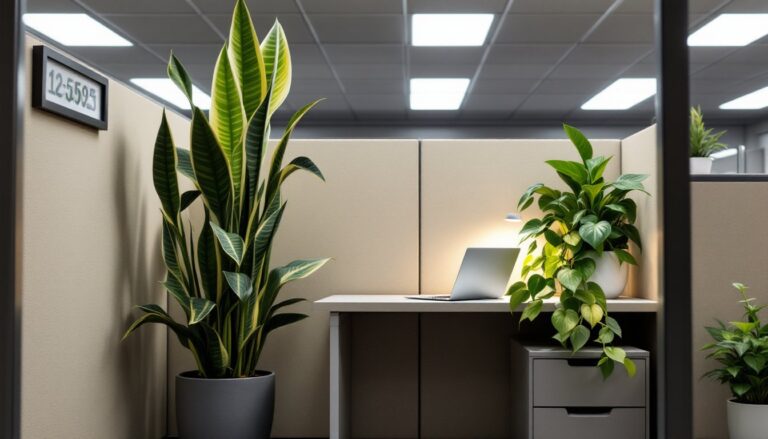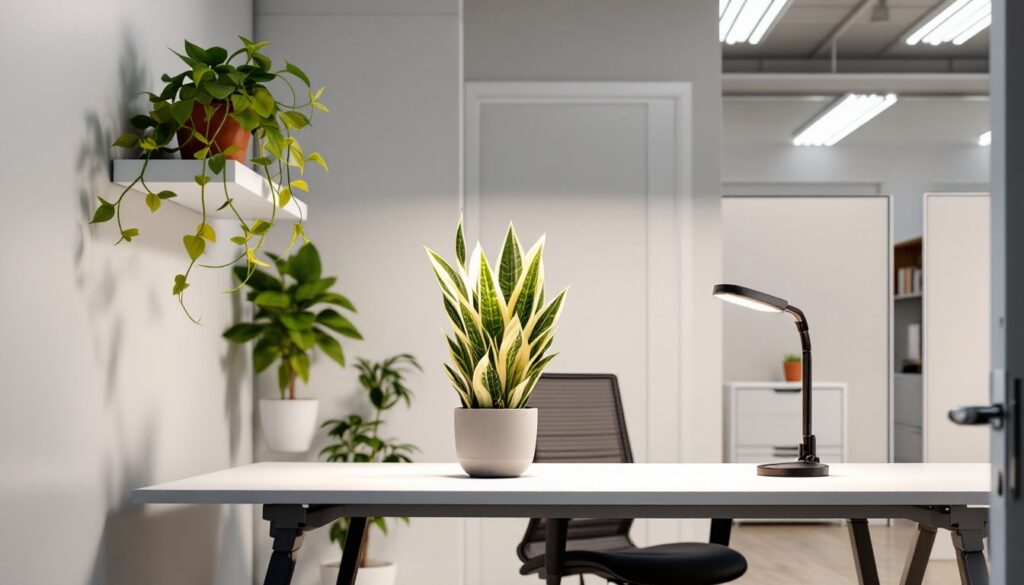

Windowless offices don’t have to feel like sterile boxes. With the right plant choices, even the most light-deprived workspace can support living greenery that improves air quality, reduces stress, and softens the hard edges of cubicle life. The challenge isn’t whether plants can survive without windows, it’s picking species adapted to survive on artificial light alone and maintaining them properly. Most indoor offices provide enough ambient fluorescent or LED light to keep certain plants alive, though supplemental grow lights can make a significant difference. This guide covers the most reliable low-light office plants, practical care strategies for windowless environments, and lighting upgrades that turn marginal conditions into thriving habitats.
Table of Contents
ToggleKey Takeaways
- Office plants for no windows thrive when you select low-light species like snake plants, pothos, and ZZ plants that tolerate artificial light and neglect.
- Overwatering is the leading cause of plant failure in windowless offices; use a soak-and-dry cycle and let soil dry between waterings to prevent root rot.
- Low-light plants require consistent artificial light for 8–12 hours daily and benefit from proper drainage, occasional leaf wiping, and minimal fertilizing to maintain health.
- Beyond aesthetics, office plants filter airborne toxins, reduce stress, lower blood pressure, and improve air quality and cognitive function in workspace environments.
- LED grow lights positioned 12–18 inches above foliage significantly boost plant growth and resilience in zero-window conditions when run on a timer for 10–14 hours daily.
Why Indoor Plants Matter in Windowless Offices
Plants in windowless offices serve functions beyond decoration. Research from NASA’s Clean Air Study and subsequent workplace wellness studies shows that certain species filter airborne toxins like formaldehyde, benzene, and trichloroethylene, common off-gassing compounds from carpet, furniture, and office equipment. While a single desk plant won’t replace a proper HVAC system, clusters of plants measurably improve indoor air quality over time.
Psychological benefits are equally tangible. Studies published in the Journal of Environmental Psychology demonstrate that visible greenery in work environments reduces perceived stress, lowers blood pressure, and improves cognitive function. Employees in offices with plants report higher job satisfaction and fewer sick days compared to those in plant-free spaces.
From a practical standpoint, plants also absorb sound and add humidity to dry office air, which is often over-conditioned by HVAC systems. In open-plan offices, strategically placed plants can dampen ambient noise by up to 5 decibels, making a noticeable difference in focus and privacy.
The key is choosing species that don’t just tolerate low light, they’ve evolved for it. Rainforest understory plants, for example, thrive in dappled or indirect light and adapt well to the consistent temperatures and artificial lighting of office buildings.
Top Low-Light Plants That Flourish Without Natural Sunlight
Not all “low-light” plants perform equally in true windowless conditions. The following species have proven track records in offices with zero natural light, provided they receive some form of ambient artificial light for at least 8–10 hours daily.
Snake Plant: The Ultimate Zero-Window Champion
Snake plant (Sansevieria trifasciata, also sold as Dracaena trifasciata) tops every windowless office list for good reason. It tolerates neglect, irregular watering, and dim conditions better than nearly any other houseplant. Snake plants perform CAM photosynthesis, meaning they open their stomata at night to reduce water loss, a huge advantage in low-humidity offices.
They grow slowly in low light, which is actually a benefit in office settings where rapid growth means constant repotting. A mature snake plant in a 10-inch pot can go two to three weeks between waterings, and it won’t sulk if someone forgets. The thick, upright leaves store water, so overwatering is a bigger risk than underwatering. Root rot from soggy soil kills more snake plants than light deprivation ever will.
Varieties like ‘Laurentii’ (yellow-edged leaves) and ‘Black Gold’ handle artificial light well, though variegation may fade slightly over time in very dim conditions. Standard office fluorescents or LEDs are sufficient, no special grow lights required.
Pothos and ZZ Plant: Nearly Indestructible Options
Pothos (Epipremnum aureum) is the trailing vine found in offices worldwide, and for good reason: it’s nearly bulletproof. Golden pothos, jade pothos, and neon pothos all tolerate low light, though growth slows and leaf size shrinks compared to brighter conditions. Pothos roots easily in water, so propagating cuttings to fill out sparse growth is straightforward. It’s also one of the top air-purifying plants according to NASA’s studies.
The main caution: pothos is toxic to cats and dogs if ingested, so keep it out of reach in pet-friendly offices. It prefers evenly moist soil but recovers quickly from drought. In windowless spaces, allow the top two inches of soil to dry between waterings to prevent root rot.
ZZ plant (Zamioculcas zamiifolia) rivals snake plant for toughness. Its thick, waxy leaves and rhizomatous roots store water, allowing it to survive weeks of neglect. ZZ plants grow slowly in low light, often adding only a few stems per year, but they maintain their glossy, dark green appearance even under weak fluorescent tubes.
ZZ plants are particularly forgiving of inconsistent watering schedules. They’re also drought-deciduous in the wild, meaning they can drop leaves and go dormant during extended dry periods, then resprout when conditions improve. In practice, this means a forgotten ZZ plant will often bounce back after a month of no water, though consistent care yields better results.
Both pothos and ZZ plants benefit from occasional leaf wiping to remove dust, which blocks light absorption in low-light environments. A damp cloth every few weeks keeps foliage efficient.
How to Care for Office Plants in No-Window Environments
Windowless plant care revolves around managing water, light duration, and airflow, not replicating sunlight intensity.
Watering: Low light means slow photosynthesis, which means reduced water uptake. Overwatering is the #1 killer of office plants. Most low-light species prefer a “soak and dry” cycle: water thoroughly until it drains from the bottom, then wait until the top 1–2 inches of soil dry out before watering again. For snake plants and ZZ plants, err on the side of underwatering.
Use pots with drainage holes. Decorative cache pots are fine, but remove the inner grow pot to water, let it drain completely, then return it. Standing water in saucers invites root rot and fungus gnats.
Soil and Containers: Standard potting mix works for most office plants, but adding perlite or orchid bark (about 20–30% by volume) improves drainage and prevents compaction. Terra cotta pots dry faster than plastic, which can be helpful for species prone to overwatering issues.
Repot only when roots visibly circle the pot or growth stalls. In low light, plants grow slowly and don’t need frequent repotting, every 2–3 years is typical.
Light Duration: Consistency matters more than intensity in windowless offices. Most low-light plants need at least 8–12 hours of artificial light daily. If the office lights shut off overnight, that’s fine, plants benefit from a light/dark cycle. If lights are off on weekends, position plants near ambient light sources or use a timer-controlled grow light (see next section).
Air Circulation and Humidity: Office HVAC systems often create dry air. While low-light plants tolerate low humidity better than tropical species, occasional misting or a small humidifier near plant clusters can prevent leaf-tip browning. Avoid placing plants directly under air vents, which cause rapid soil drying and temperature swings.
Fertilizing: Low-light plants grow slowly and require minimal feeding. A half-strength, balanced liquid fertilizer (such as 10-10-10 or 20-20-20) applied once every 8–12 weeks during spring and summer is sufficient. Over-fertilizing causes salt buildup in soil, leading to brown leaf tips and stunted growth. Skip fertilizer entirely in fall and winter unless the office maintains identical conditions year-round.
Pest Management: Fungus gnats and spider mites are the most common office plant pests. Fungus gnats breed in consistently moist soil, so reducing watering frequency usually solves the problem. Yellow sticky traps catch adults. Spider mites appear as fine webbing and stippled leaves: they thrive in dry conditions. Wipe leaves with a damp cloth and increase humidity to discourage them.
Creative Lighting Solutions to Boost Plant Health
Standard office lighting keeps low-light plants alive, but targeted supplemental light improves growth, color, and resilience.
LED Grow Lights: Modern LED grow lights are compact, energy-efficient, and don’t generate excessive heat. Full-spectrum LEDs mimic natural sunlight and work well for desks or shelves. Look for bulbs rated 2000–3000 lumens for desk plants: larger installations may need panel-style fixtures.
Clip-on grow lights with gooseneck arms are popular for individual desk plants. Brands like GE, Sansi, and Soltech Solutions offer bulbs that fit standard desk lamps, making upgrades simple. Position the light 12–18 inches above foliage and run it on a timer for 10–14 hours daily.
Fluorescent Tubes: If the office already uses fluorescent fixtures, plants positioned within 12–24 inches of tubes receive adequate light. Cool white or daylight (5000K–6500K) fluorescents work better than warm white for plant growth. T5 and T8 tubes are common in offices and sufficient for low-light species.
Track Lighting and Spotlights: Small LED spotlights or track lights aimed at plant groupings provide focused light without overhauling the office. This works well for larger plants like dracaena or floor-standing snake plants.
Distance and Duration: Light intensity decreases rapidly with distance. A grow light effective at 12 inches may be useless at 36 inches. Measure lumens at plant height if possible, or follow manufacturer guidelines. Timers eliminate the need to remember daily on/off cycles and ensure consistency, which plants prefer over erratic schedules.
Natural Light Borrowing: If a windowless office connects to a space with windows, consider rotating plants every few weeks. A two-week rotation near a window can reinvigorate growth, though this isn’t necessary for true low-light champions like snake plant or ZZ plant.
Avoid placing plants near heat-generating equipment (printers, servers, space heaters) or in cold drafts from exterior doors. Temperature stability matters more than most people realize.
Conclusion
Windowless offices can absolutely support healthy, thriving plants, it just requires selecting species adapted to low light and adjusting care routines to match slower growth and reduced water needs. Snake plants, pothos, and ZZ plants are proven performers that tolerate neglect and dim conditions better than most. Consistent artificial light, careful watering, and optional grow lights turn marginal spaces into green, productive environments. The payoff, cleaner air, lower stress, and a more pleasant workspace, makes the minimal effort worthwhile.