
Office environments have evolved beyond cubicles and fluorescent lighting. Today’s workspaces prioritize wellness, productivity, and design, and plants deliver on all three fronts. Studies show that indoor greenery reduces stress, improves air quality, and boosts focus, making them essential for modern work settings. But not all plants fit the contemporary office aesthetic or the reality of infrequent watering and variable light. The right selection combines sculptural form, minimal care requirements, and resilience. This guide walks through seven top picks that thrive indoors, look sharp in modern interiors, and won’t demand constant attention.
Table of Contents
ToggleKey Takeaways
- Modern office plants reduce stress by 15% and improve air quality by filtering VOCs from furniture and electronics, making them essential for contemporary workspaces.
- Low-maintenance varieties like snake plants, ZZ plants, and pothos thrive in artificial light and irregular watering conditions, perfect for busy professionals.
- Strategic placement near desks (18-24 inches from monitors) and in corners using statement plants like Monstera or Fiddle Leaf Figs maximizes both visual impact and health benefits.
- Overwatering is the leading cause of plant failure—check soil 2 inches deep and water only when dry to prevent root rot.
- Grouping three to five plants of varying heights creates micro-humidity zones and layered visual interest while improving workspace aesthetics.
Why Modern Offices Need Plants More Than Ever
The shift toward hybrid work and flexible office layouts has changed how professionals interact with their workspaces. Open-plan designs often lack visual warmth, and home offices can feel sterile without intentional styling. Plants bridge that gap.
From a health perspective, indoor plants improve air quality by filtering volatile organic compounds (VOCs) emitted by furniture, carpets, and electronics. NASA’s Clean Air Study identified several common houseplants, including snake plants and pothos, as effective at removing toxins like formaldehyde and benzene. While a single plant won’t replace a HEPA filter, clustering several in a workspace makes a measurable difference.
Beyond air quality, greenery impacts mental performance. Research from the University of Exeter found that employees in plant-rich environments showed 15% higher productivity and reported lower stress levels. The biophilic design trend, integrating natural elements into built environments, has moved from boutique offices to mainstream commercial spaces.
Modern offices also demand low-maintenance solutions. Unlike traditional office plants that required dedicated janitorial care, today’s picks tolerate irregular watering, adapt to artificial light, and forgive neglect. That makes them practical for both corporate settings and home offices where plant care competes with deadlines.
Top Plant Picks for Contemporary Workspaces
Selecting the right plant balances aesthetics, durability, and care requirements. The following varieties fit modern design principles while tolerating typical office conditions.
Low-Maintenance Varieties for Busy Professionals
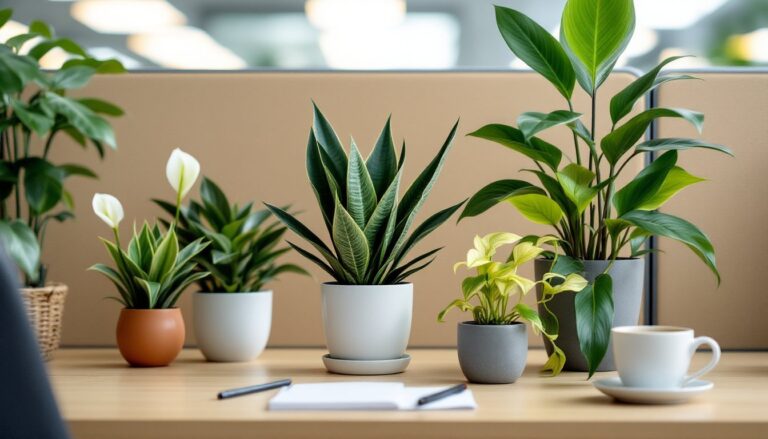
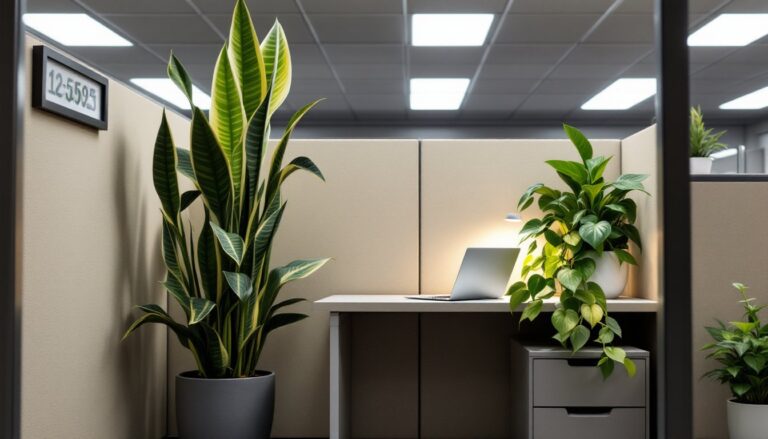
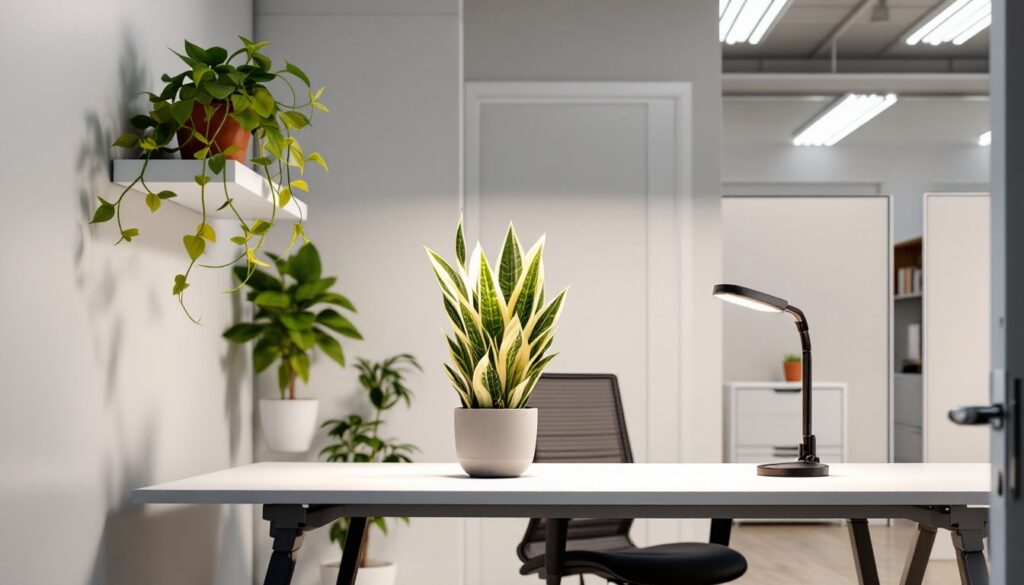
Snake Plant (Sansevieria trifasciata): Vertical, architectural foliage suits minimalist interiors. Tolerates low light and irregular watering, ideal for corner placement or credenzas. Varieties like ‘Black Gold’ and ‘Cylindrica’ add sculptural interest. Water every 2–3 weeks: overwatering causes root rot. Handles fluorescent and LED lighting without issue.
ZZ Plant (Zamioculcas zamiifolia): Glossy, dark green leaves on thick stems. Thrives in low to medium light and can go three weeks without water. Its waxy foliage resists dust, reducing maintenance. Grows slowly, staying compact for years. Note: all parts are toxic if ingested, so keep away from curious pets or children.
Pothos (Epipremnum aureum): Trailing vines work well on shelves or in hanging planters. Adapts to various light conditions, though variegated varieties need brighter spots to maintain color. Water when the top two inches of soil dry out. Pothos grows quickly and can be propagated from cuttings, useful for expanding greenery without additional cost.
Chinese Evergreen (Aglaonema): Variegated cultivars like ‘Silver Bay’ and ‘Red Valentine’ add pops of color without blooms. Prefers indirect light but tolerates fluorescent fixtures. Water weekly during growing season, less in winter. Slow-growing and compact, fitting desks or side tables.
Statement Plants That Make a Design Impact
Monstera Deliciosa: Large, fenestrated leaves create drama in spacious offices or reception areas. Needs medium to bright indirect light and weekly watering. Supports a moss pole or trellis for vertical growth. Mature plants can reach 6–8 feet indoors, so plan placement accordingly.
Fiddle Leaf Fig (Ficus lyrata): Tall, upright growth with broad, violin-shaped leaves. Fits modern interiors but demands consistency: stable light, regular watering (when top inch of soil is dry), and no drafts. Sensitive to relocation, choose its spot carefully. Best for offices with large windows providing bright, indirect light.
Bird of Paradise (Strelitzia reginae): Tropical aesthetic with broad, paddle-shaped leaves. Grows 4–6 feet tall in containers. Requires bright light, south or west-facing windows work best. Water when soil surface dries. Adds height and visual weight to empty corners or beside lounge seating.
Placement Strategies for Maximum Visual and Health Benefits
Where a plant sits affects both its health and its impact on the workspace. Assess light conditions first. Most offices rely on artificial lighting, which varies in spectrum and intensity. Full-spectrum LED bulbs (5000K–6500K) support photosynthesis better than standard cool-white fluorescents.
For desks and workstations, choose compact, low-maintenance varieties like pothos or Chinese evergreen. Position plants 18–24 inches from monitors to soften screen glare without obstructing sightlines. Avoid placing plants near HVAC vents, which cause temperature fluctuations and dry out soil.
Corners and floor space suit statement plants, monstera, bird of paradise, or tall snake plants. Use 10–14 inch diameter pots with drainage holes to accommodate root growth. Elevate pots on risers or plant stands to protect flooring from moisture and improve air circulation around the base.
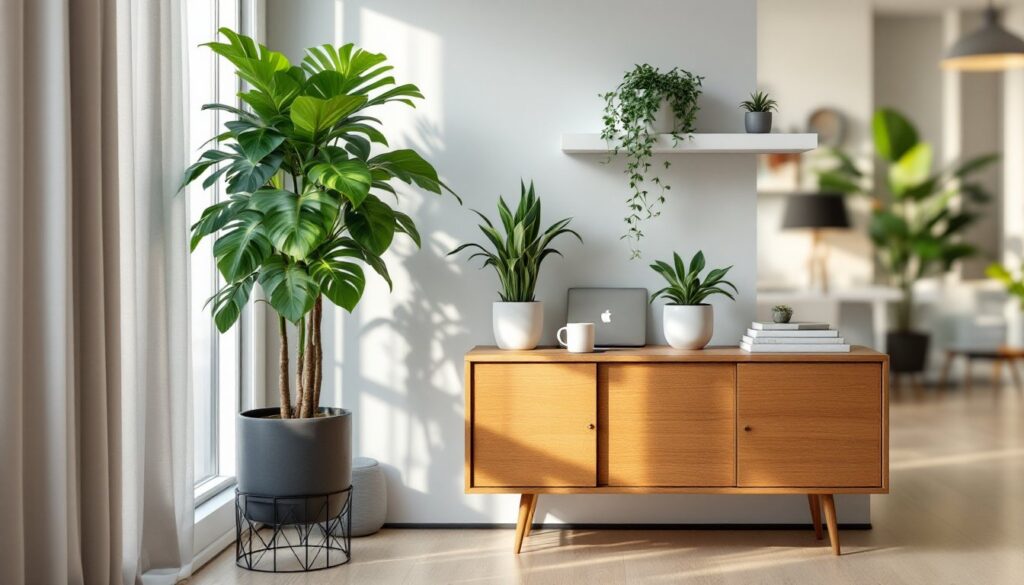
Shelving and credenzas work for trailing plants or smaller specimens. Ensure shelves support the combined weight of pot, soil, and plant (a 6-inch potted plant averages 3–5 pounds, while a 10-inch pot can reach 15–20 pounds).
Grouping plants creates visual cohesion and micro-humidity zones, beneficial in air-conditioned spaces. Cluster three to five plants of varying heights for layered interest. Odd-numbered groupings feel more natural than symmetrical pairs.
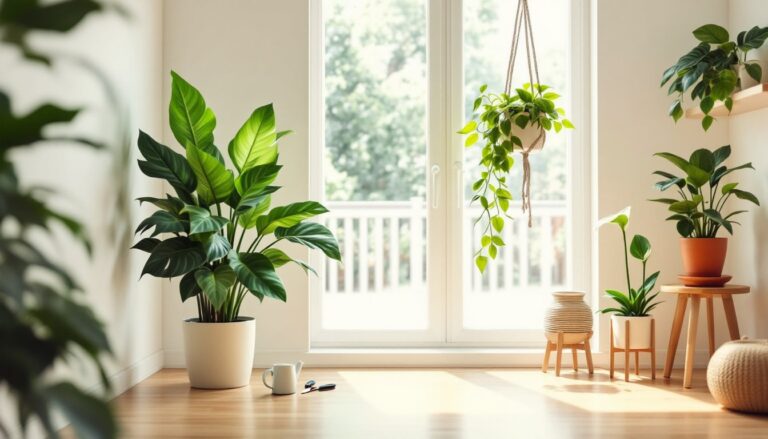
For home offices, consider window orientation. South-facing windows provide the brightest light, suitable for fiddle leaf figs or bird of paradise. East windows offer gentle morning sun, ideal for most varieties. North-facing windows suit low-light plants like ZZ plants or snake plants. West windows can cause afternoon heat stress, use sheer curtains to diffuse intensity.
Caring for Your Office Plants: Essential Tips
Consistent care routines prevent most plant failures. Start with proper potting mix. Use well-draining houseplant soil or amend standard potting mix with perlite (20–30% by volume) to prevent compaction. Avoid garden soil, which drains poorly indoors.
Watering is the most common point of failure. Overwatering kills more houseplants than underwatering. Check soil moisture by inserting a finger 2 inches deep, water only if it feels dry. For larger pots, a moisture meter ($10–$15) provides accurate readings at root level. Use room-temperature water: cold water shocks roots.
Most office plants thrive in 60–75°F, typical for climate-controlled buildings. Avoid placing plants near exterior doors, drafty windows, or heating/cooling vents. Sudden temperature swings cause leaf drop and stress.
Humidity matters for tropical varieties. Offices average 30–40% relative humidity, which is borderline for some plants. Grouping plants raises local humidity, or use a small humidifier during winter when heating systems dry the air. Misting provides minimal benefit and can encourage fungal issues.
Fertilize sparingly. Indoor plants grow slower than outdoor specimens and need less nutrition. Apply diluted liquid fertilizer (half the package recommendation) every 4–6 weeks during spring and summer. Skip fertilizing in fall and winter when growth slows.
Dust accumulation blocks light absorption. Wipe large leaves with a damp cloth monthly. For smaller-leaved plants, rinse gently in a sink or shower.
Repotting becomes necessary when roots circle the pot’s interior or growth slows even though proper care. Move up to a pot 2 inches larger in diameter. Repot in spring for best recovery. Use fresh potting mix and check for root rot (brown, mushy roots) before replanting.
Watch for pests: spider mites, mealybugs, and fungus gnats are common indoors. Inspect plants weekly. Treat infestations with insecticidal soap or neem oil, following label directions. Isolate affected plants to prevent spread.
Conclusion
Office plants aren’t decorative afterthoughts, they’re functional design elements that improve air quality, reduce stress, and enhance workspace appeal. The seven varieties outlined here suit modern aesthetics while tolerating real-world office conditions. Start with one or two low-maintenance picks, observe how they respond to available light and watering routines, then expand. With consistent but minimal care, these plants will outlast most office furniture and keep workspaces healthier for years.