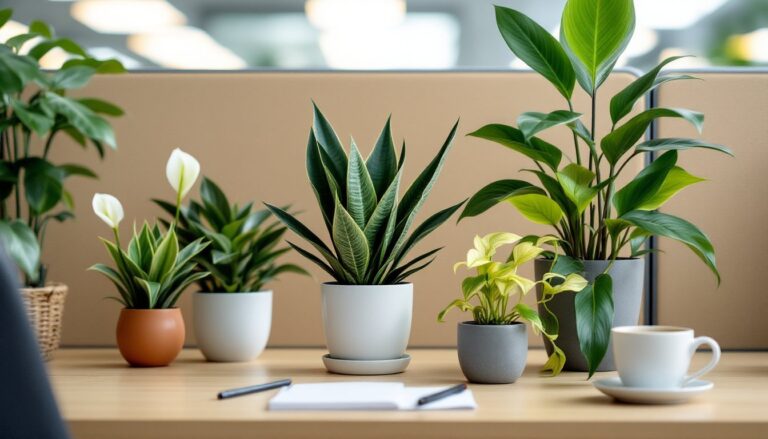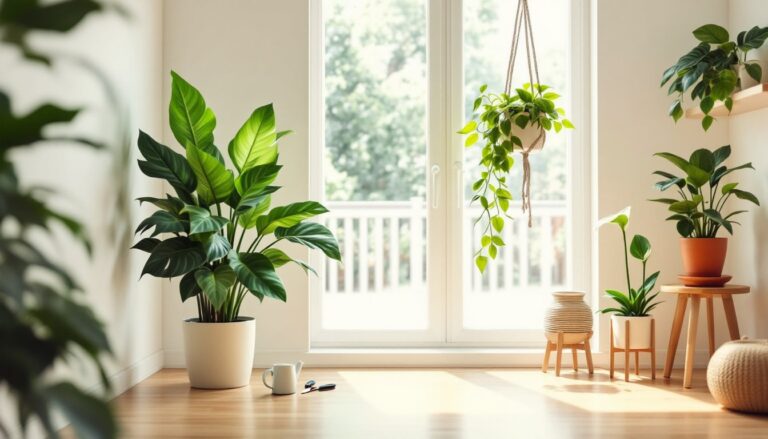

Fluorescent overhead lighting, limited windows, and long stretches without natural sunlight, most office environments aren’t exactly a botanical paradise. Yet adding greenery to a workspace can reduce stress, improve air quality, and make those Monday mornings slightly more bearable. The trick is choosing plants that don’t just tolerate low light but actually thrive in it. Unlike high-maintenance tropicals that demand sun-drenched windowsills, the best low light office plants forgive inconsistent watering, adapt to artificial lighting, and keep looking good without constant attention. This guide covers the toughest, most forgiving varieties that can handle the typical office setup.
Table of Contents
ToggleKey Takeaways
- Low light plants like snake plants, pothos, and ZZ plants thrive in office environments with fluorescent lighting and adapt to inconsistent watering schedules.
- Snake plant, pothos, and ZZ plant species tolerate light levels as low as 25–50 foot-candles and only require watering every 2–3 weeks, making them ideal for busy office settings.
- Low light office plants require minimal intervention—water when soil is dry 1–2 inches deep, avoid overwatering (the primary threat), and fertilize only every 2–3 months during growing seasons.
- Match your low light plant selection to your office space: compact varieties for desks, pothos for cubicles, larger specimens for conference rooms, and durable options like snake plants for high-traffic areas.
- Even low-maintenance plants need at least 50 foot-candles of light; in completely dark spaces, add a small LED grow light (15–20 watts) running 8–10 hours daily to prevent decline.
Why Low Light Plants Are Perfect for Office Environments
Office buildings present unique challenges for plant care. Interior spaces often rely entirely on artificial lighting, typically fluorescent tubes or LEDs that emit around 50–150 foot-candles, well below the 200+ that medium-light plants prefer. Add in climate control systems that dry out the air, inconsistent watering schedules, and the occasional forgotten long weekend, and it’s clear why many office plants don’t make it past their first quarter.
Low light plants have evolved to survive on forest floors or under dense canopy cover, which makes them naturally suited to office conditions. Species like Sansevieria, Epipremnum, and Zamioculcas store water in their tissues, tolerate dry air, and photosynthesize efficiently under limited light. They’re not just surviving, they’re adapted for exactly this kind of environment.
Beyond resilience, there’s a practical benefit: these plants require less intervention. Watering can drop to once every 10–14 days for many varieties, and they won’t sulk if someone forgets to check on them during a busy week. For shared office spaces or cubicles where plant care isn’t anyone’s official job, that low-maintenance profile is essential.
Finally, low light plants tend to grow slowly, which means less frequent repotting and pruning. A ZZ plant or snake plant can sit in the same pot for two years without becoming rootbound, making them ideal for desks, shelves, or corners that don’t get much foot traffic.
Top Low Light Plants That Thrive in Office Settings
Snake Plant: The Indestructible Office Companion
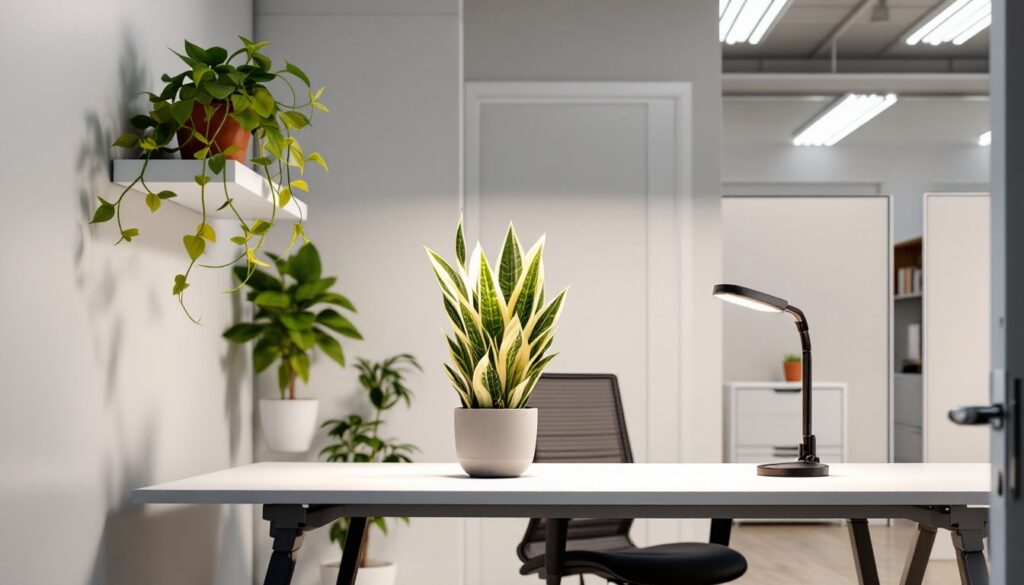
The snake plant (Sansevieria trifasciata), also called mother-in-law’s tongue, is the gold standard for neglect tolerance. Its thick, upright leaves grow 2–4 feet tall depending on variety, and it can handle everything from fluorescent desk lamps to windowless conference rooms. Snake plants use CAM photosynthesis, meaning they open their pores at night to reduce water loss, perfect for dry office air.
Watering needs are minimal. In most offices, every 2–3 weeks is sufficient: overwatering is the only real threat. The soil should dry out completely between waterings. Use a well-draining mix, standard potting soil amended with perlite or cactus mix works well. If the leaves start to wrinkle or curl inward, it’s thirsty: if they turn mushy or yellow at the base, it’s been overwatered.
Snake plants also filter airborne toxins like formaldehyde and benzene, though it’s worth noting that NASA’s famous Clean Air Study used concentrations far higher than typical office levels. Still, any plant contributes to better air circulation and humidity.
For placement, snake plants do fine with as little as 10–20 foot-candles of light. Variegated varieties (yellow or white striping) may lose some color intensity in very dim conditions but will remain healthy.
Pothos and ZZ Plant: Low Maintenance Favorites
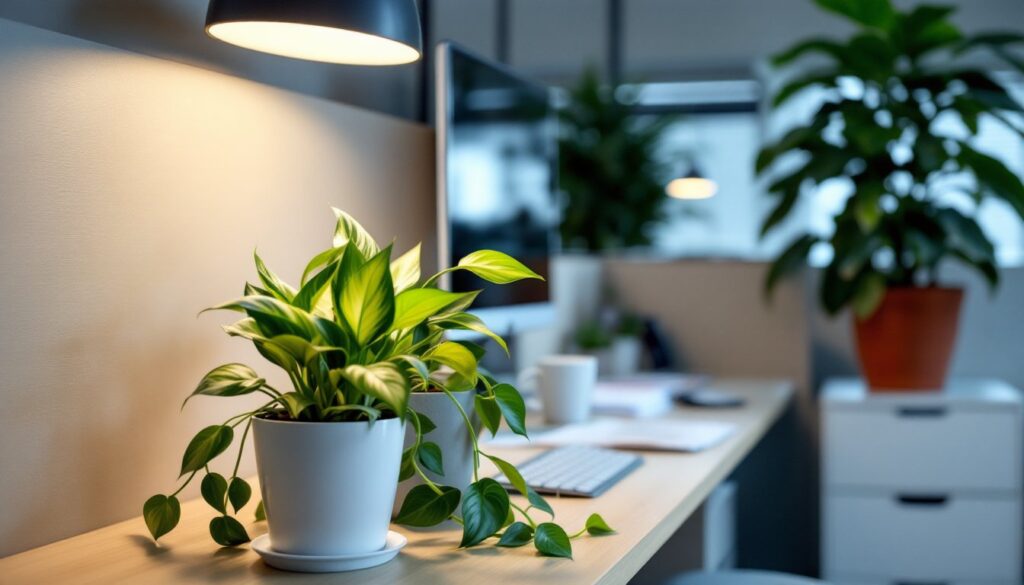
Pothos (Epipremnum aureum) is a trailing vine that works beautifully on shelves, filing cabinets, or hanging planters. Its heart-shaped leaves come in varieties like golden pothos (green with yellow variegation), marble queen (white and green), and jade (solid green). Pothos tolerates fluorescent lighting down to about 50 foot-candles and can grow several feet per year, even indoors.
Care is straightforward: water when the top 1–2 inches of soil feel dry, roughly once a week in most offices. Pothos will visibly droop when it needs water, then perk back up within hours of watering, a helpful signal for beginners. It’s also easy to propagate: snip a 4–6 inch stem cutting just below a node (the bump where leaves emerge), place it in water, and roots will develop in 1–2 weeks. This makes it simple to share cuttings with coworkers or expand a collection without buying new plants.
The ZZ plant (Zamioculcas zamiifolia) is even tougher. Its thick, waxy leaves and bulbous rhizomes store water, allowing it to go 2–3 weeks between waterings. ZZ plants grow slowly, usually 1–2 new stems per year, and can tolerate everything from indirect sunlight to windowless break rooms. They’re also pest-resistant and rarely suffer from disease.
One caution: both pothos and ZZ plants contain calcium oxalate crystals, which are toxic if ingested. Keep them out of reach of pets or curious coworkers who might mistake them for a snack. Handling them is safe, but wash hands after pruning or repotting.
How to Care for Low Light Office Plants
Even low-maintenance plants need a baseline of care to stay healthy. Here’s what to focus on:
Watering Schedule:
Most low light plants prefer to dry out between waterings. Stick a finger 1–2 inches into the soil: if it’s dry, water thoroughly until it drains from the bottom. Avoid leaving plants sitting in standing water, which can cause root rot. For offices without easy access to sinks, a small watering can with a narrow spout helps control flow.
Light Requirements:
Low light doesn’t mean no light. Plants still need some exposure to photosynthesize. Fluorescent or LED office lighting (at least 50 foot-candles) is usually sufficient for species like pothos, snake plant, and ZZ plant. Avoid placing them in completely dark storage closets or corners more than 10–12 feet from any light source. If leaves start to yellow or growth stalls, consider moving the plant closer to a window or adding a small grow light.
Humidity and Temperature:
Offices typically maintain 35–50% humidity and 68–72°F, which most low light plants tolerate well. If the air feels especially dry (common in winter with heating systems), misting leaves once a week or grouping plants together can help. Avoid placing plants directly under air vents or near space heaters, which can cause rapid moisture loss.
Fertilizing:
Low light plants grow slowly and don’t need heavy feeding. A balanced liquid fertilizer (10-10-10 or 20-20-20 NPK ratio) diluted to half strength and applied every 2–3 months during spring and summer is plenty. Skip fertilizing in fall and winter when growth slows. Over-fertilizing causes salt buildup in the soil, which can damage roots.
Repotting:
Most low light plants only need repotting every 18–24 months. Signs include roots growing out of drainage holes or water running straight through without absorbing. Move up one pot size (typically 2 inches larger in diameter) and refresh the soil. Use a well-draining mix, standard potting soil blended with perlite or orchid bark works for most species.
Pest Management:
Indoor plants occasionally attract spider mites, mealybugs, or fungus gnats, especially if overwatered. Inspect leaves every few weeks. Wipe down foliage with a damp cloth to remove dust and check for pests. If bugs appear, treat with insecticidal soap or neem oil spray, following product instructions. Always test on a few leaves first to avoid damage.
Choosing the Right Plant for Your Office Space
Not all low light plants fit every workspace. Here’s how to match species to specific office setups:
Desks and Small Workstations:
Compact plants like 6–8 inch potted snake plants, small pothos in 4-inch pots, or desk-sized ZZ plants fit without crowding the workspace. Look for varieties that grow upright rather than sprawling. A snake plant cultivar like ‘Hahnii’ (bird’s nest snake plant) stays under 12 inches tall and works well on corner desks or filing cabinets.
Cubicles with Limited Light:
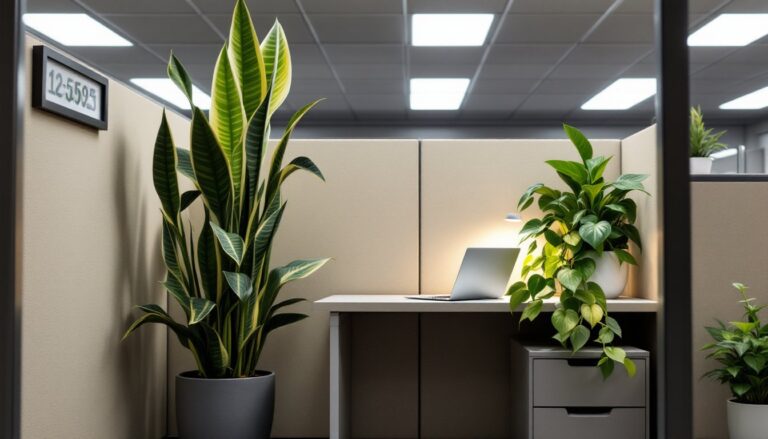
Cubicles often have no windows and rely entirely on overhead fluorescents. ZZ plants and pothos handle this best, as they tolerate light levels as low as 25–50 foot-candles. Place them on top of monitors, shelves, or partitions where they’ll get the most exposure to overhead lighting.
Conference Rooms and Common Areas:
Larger spaces can accommodate bigger specimens. A 3–4 foot tall snake plant in a 10–12 inch floor planter makes a statement in corners or next to seating areas. Pothos can be trained to trail along bookshelves or allowed to cascade from wall-mounted planters. For shared spaces, choose plants that don’t require daily attention, something that can handle a missed watering without immediately wilting.
Windowless Offices or Basements:
In spaces with zero natural light, consider adding a small grow light. A basic LED grow bulb (15–20 watts) in a desk lamp provides enough supplemental light for most low light plants. Run it for 8–10 hours a day to mimic natural daylight cycles. Without any light source, even the toughest plants will eventually decline.
High-Traffic Areas:
For hallways, break rooms, or entryways where plants might get bumped or moved, durability matters. Snake plants and ZZ plants have sturdy, rigid structures that won’t tip easily or shed leaves when jostled. Avoid delicate trailing vines in these spots.
Conclusion
Low light plants bring life to office spaces without demanding constant attention. Snake plants, pothos, and ZZ plants top the list for resilience, handling everything from fluorescent lighting to inconsistent watering schedules. Success comes down to matching the plant to the space, sticking to a simple care routine, and resisting the urge to overwater. With the right setup, even a windowless cubicle can support thriving greenery year-round.