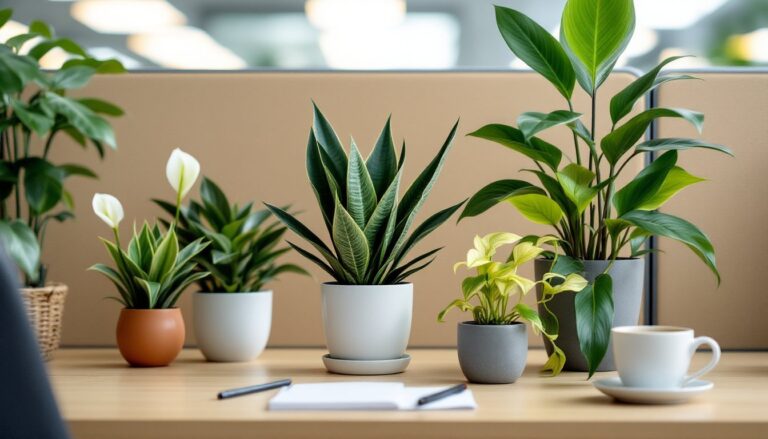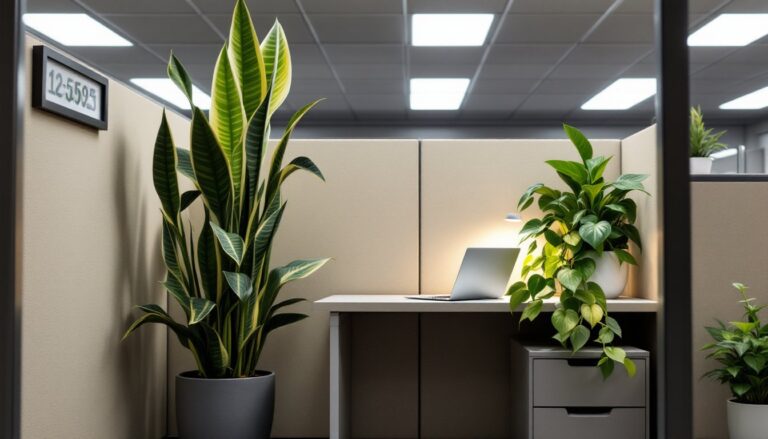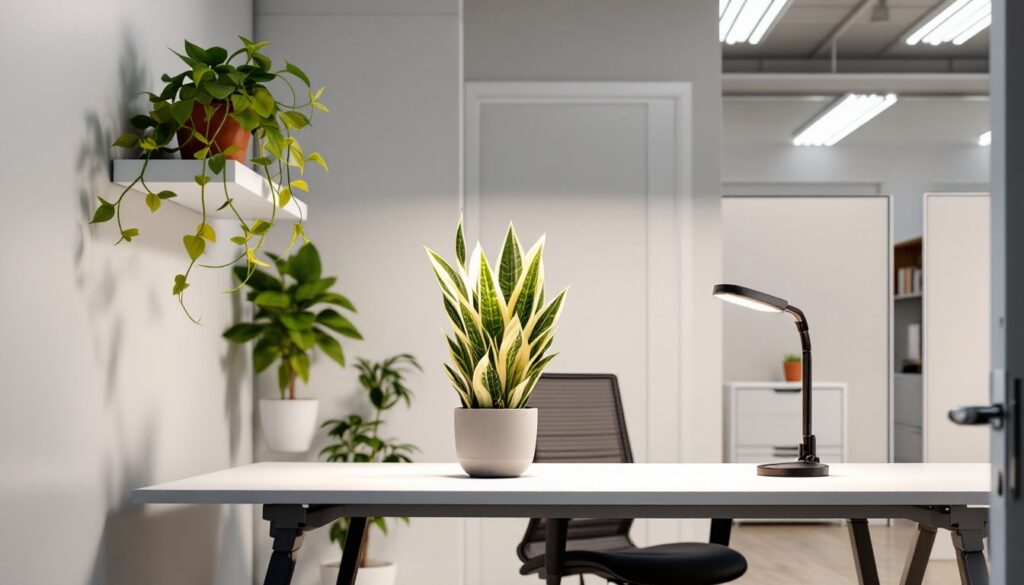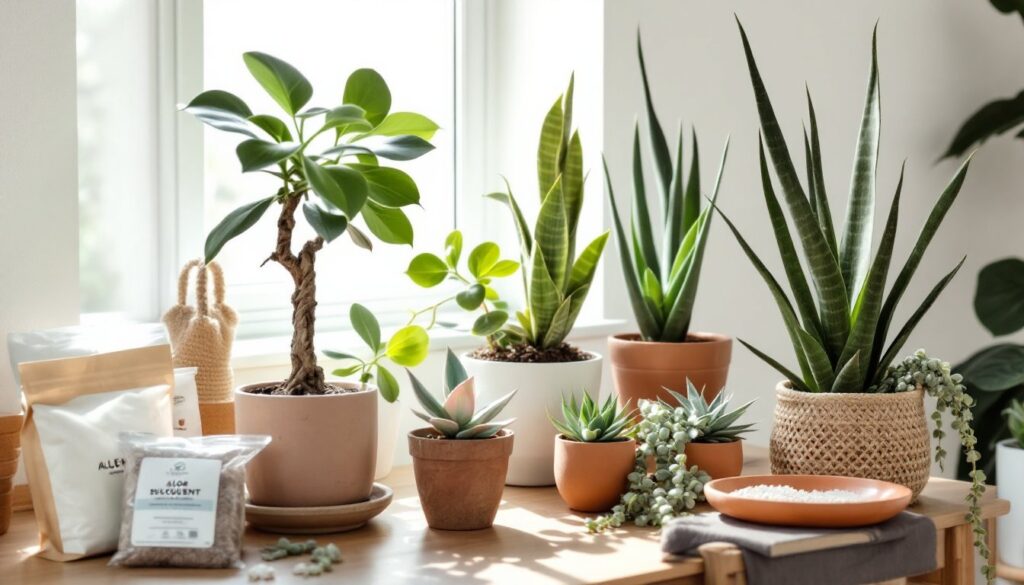

Succulents have become the go-to choice for homeowners who want low-maintenance greenery that actually survives indoors. These plants store water in their thick leaves, stems, or roots, an evolutionary trick that makes them far more forgiving than fussy ferns or finicky orchids. But “succulent” isn’t a single plant: it’s a category spanning hundreds of species with wildly different shapes, sizes, and care requirements. Some cascade from hanging baskets, others form tight rosettes, and a few grow tall enough to anchor a corner. Understanding which types thrive indoors helps match the right plant to the right spot, whether it’s a bright kitchen windowsill or a dimly lit office desk.
Table of Contents
ToggleKey Takeaways
- Types of succulent house plants store water in their tissues, making them significantly more forgiving than tropical houseplants and ideal for low-maintenance indoor gardening.
- Aloe vera combines practicality with beauty, thriving in bright indirect light and requiring water only every two to three weeks, with easy propagation through basal pups.
- Echeveria rosettes demand bright light to maintain their vibrant colors and geometric form, and should be watered at the soil base rather than directly into the leaves to prevent rot.
- Jade plants can live for decades as indoor tree-like specimens, growing slowly with minimal care and developing attractive red-tinted leaf edges under bright, direct light.
- Snake plants are the ultimate low-light succulent, tolerating neglect better than any other houseplant and even surviving in dim corners or windowless bathrooms.
- Trailing succulents like string of pearls add dramatic vertical interest but require more precise watering than upright varieties, as overwatering their fragile stems causes rapid rot.
What Makes Succulents Perfect for Indoor Growing
Succulents evolved in arid climates where rainfall is scarce and sporadic. Their fleshy tissue acts like a built-in reservoir, allowing them to go weeks between waterings, a trait that’s ideal for people who travel or forget to water regularly.
Indoor environments mirror desert conditions more than most realize. Central heating and air conditioning create dry air, and many homes lack the humidity tropical plants demand. Succulents handle these conditions without the leaf browning or wilting common in other houseplants.
Most succulents need bright, indirect light to maintain their compact shape and vibrant colors. South- or west-facing windows work best in most climates. Without adequate light, plants stretch toward the source, a process called etiolation, resulting in leggy, pale growth. Supplemental LED grow lights can fill gaps during winter months or in rooms with limited natural light.
Pot selection matters. Terra cotta or unglazed ceramic pots wick moisture away from roots, preventing rot. Whatever container a grower chooses, drainage holes are non-negotiable. Sitting water kills succulents faster than underwatering.
Soil composition is equally critical. Standard potting mix retains too much moisture. A cactus and succulent mix, typically a blend of potting soil, coarse sand, and perlite or pumice, drains quickly while providing enough structure for roots to anchor. Mixing standard potting soil 50/50 with perlite works in a pinch.
Aloe Vera: The Healing Succulent
Aloe vera is both a practical houseplant and a first-aid kit in a pot. The clear gel inside its thick, tapered leaves soothes minor burns, cuts, and sunburn, a reputation that’s made it a kitchen staple for generations.
The plant grows in upright clumps, with mature specimens reaching 12 to 24 inches tall and wide. Leaves are green with slight spotting when young, turning uniformly green as they mature. Small offshoots, called pups, emerge at the base and can be separated once they’re a few inches tall, an easy way to propagate new plants.
Aloe tolerates bright, indirect light but can handle a few hours of direct morning sun. Too much intense light causes leaves to turn orange or brown, while too little makes them droop and thin. Watering once every two to three weeks during the growing season (spring and summer) is sufficient: cut back to monthly in winter when growth slows.
Root rot is the biggest threat. Aloe roots are shallow and prone to fungal issues if soil stays wet. If leaves turn yellow and mushy at the base, the plant’s likely overwatered. Letting the soil dry completely between waterings prevents most problems.
A well-draining pot that’s slightly snug works best. Aloe doesn’t mind being root-bound and often produces more pups when slightly crowded. Repotting every two to three years in fresh cactus mix keeps nutrients available.
Echeveria: Rosette-Shaped Beauties
Echeveria species form tight, symmetrical rosettes that look almost sculpted. Leaf colors range from pale blue-green to dusty purple, often with pink or red edges that intensify under bright light. They’re slow-growing and compact, making them ideal for shallow dishes or mixed arrangements.
Most varieties stay under 6 inches in diameter, though some species like Echeveria gibbiflora can reach 12 inches. The geometric leaf arrangement is the main attraction, but mature plants send up tall, arching flower stalks with bell-shaped blooms in shades of coral, pink, or yellow.
Bright light is essential for maintaining color and compact form. Echeverias grown in low light lose their pigmentation and stretch, ruining the rosette shape. A south-facing window or supplemental grow light keeps them dense and vibrant.
Watering technique matters. Pouring water directly into the rosette traps moisture between leaves, inviting rot and fungal issues. Instead, water the soil at the base of the plant until it drains from the bottom, then let the pot dry completely before watering again, typically every 10 to 14 days in warm months.
Echeverias are sensitive to extreme heat and cold. They thrive in temperatures between 65°F and 80°F and should be kept away from drafty windows or heating vents. Light frost can damage or kill them, so outdoor summer stays need to end before nighttime temps drop below 40°F.
Leaf propagation is straightforward. Gently twist a healthy leaf from the stem, let the cut end callus for a day or two, then lay it on dry cactus mix. Roots and tiny rosettes form at the base within a few weeks, no watering needed until roots appear.
Jade Plant: The Lucky Money Tree
The jade plant (Crassula ovata) is a succulent tree that can live for decades with minimal care. Its thick, woody stems and glossy, oval leaves give it a bonsai-like appearance, and mature specimens can reach 3 to 6 feet tall indoors.
Jade plants grow slowly but steadily, adding a few inches per year under good conditions. Older plants develop substantial trunks and may produce small, star-shaped white or pink flowers in winter, though blooming is rare indoors without a significant temperature drop to trigger it.
Bright, direct light suits jade plants well. They can handle several hours of morning sun, which encourages compact growth and red-tinted leaf edges. In lower light, they survive but grow leggy and lose the dense, shrubby form that makes them attractive.
Watering follows the standard succulent rule: soak thoroughly, then let soil dry out completely. During active growth in spring and summer, that’s roughly every two weeks. In winter, monthly watering is often enough. Overwatering causes leaves to drop and roots to rot: underwatering leads to shriveled, wrinkled leaves that plump back up after a drink.
Jade plants are top-heavy as they mature. A sturdy ceramic or terra cotta pot prevents tipping. Repotting every three to four years into a container one size larger gives roots room to expand without overwhelming the plant.
Pruning shapes the plant and encourages branching. Snipping stems just above a leaf node triggers new shoots to emerge below the cut, creating a fuller canopy. Cuttings root easily in dry soil, let the cut end callus for a few days, then stick it in cactus mix and wait. No rooting hormone needed.
Snake Plant: The Low-Maintenance Champion
The snake plant (Sansevieria trifasciata, now reclassified as Dracaena trifasciata) tolerates neglect better than almost any other houseplant. Stiff, upright leaves grow from underground rhizomes, and the plant can go a month or more without water.
Varieties range from the tall, dark green ‘Laurentii’ with yellow leaf margins to the compact, cylindrical ‘Cylindrica’ and the low-growing, bird’s-nest-shaped ‘Hahnii’. Mature plants reach anywhere from 6 inches to 4 feet depending on variety.
Snake plants handle low to bright indirect light, though growth is faster and colors more vivid in brighter spots. They’re one of the few succulents that actually survive in dim corners or windowless bathrooms, they won’t thrive, but they won’t die either.
Watering is minimal. During the growing season, water every three to four weeks, letting the soil dry thoroughly between. In winter, monthly watering or less is fine. Overwatering causes rhizome rot, which spreads quickly and often kills the plant. If leaves turn yellow and mushy at the base, it’s too late to save that section, remove affected leaves and let the soil dry out completely.
Root-bound conditions don’t bother snake plants. They’ll grow in the same pot for years, and crowding actually encourages the plant to send up new shoots. When roots start pushing the plant out of the pot, it’s time to divide or repot.
Propagation works through division or leaf cuttings. To divide, unpot the plant, separate rhizomes with a clean knife, and replant sections. For leaf cuttings, cut a healthy leaf into 3- to 4-inch segments, let them callus for a day, then plant the bottom end in dry cactus mix. Roots and new shoots emerge in a few weeks.
String of Pearls and Other Trailing Varieties
String of pearls (Senecio rowleyanus) is a trailing succulent with bead-like leaves strung along thin, delicate stems. It’s a showstopper in hanging baskets or spilling over the edge of a shelf, though it’s less forgiving than upright succulents.
Each “pearl” is a modified leaf that stores water. Stems can trail 2 to 3 feet or longer under ideal conditions, though they’re fragile and break easily when handled. White, cinnamon-scented flowers appear on thin stalks in spring if the plant experiences a winter rest period with cooler temps and reduced watering.
Bright, indirect light keeps growth tight and healthy. Too much direct sun scorches stems: too little causes gaps between pearls and weak, sparse growth. East-facing windows work well, or a spot a few feet back from a bright south window.
Watering is tricky. String of pearls needs thorough soaking, but only after the soil is completely dry and pearls start to pucker slightly, a sign they’re using stored water. Watering while pearls are still plump leads to rot. During summer, that’s typically every two weeks: in winter, cut back to three or four.
These plants are sensitive to temperature fluctuations and drafts. Keep them away from heating vents, air conditioners, and frequently opened doors. Consistent temps between 70°F and 80°F suit them best.
Other trailing succulents worth growing include string of bananas (Senecio radicans), with curved, banana-shaped leaves, and burro’s tail (Sedum morganianum), which has thick, overlapping leaves on trailing stems that can reach 3 feet. Both need similar care: bright light, infrequent watering, and gentle handling to avoid breaking fragile stems.
Conclusion
Choosing the right succulent comes down to matching light availability, watering habits, and available space with the plant’s needs. Aloe and jade plants handle a range of conditions and forgive occasional mistakes. Echeverias reward careful attention with stunning geometry and color. Snake plants survive neglect and low light that would kill other succulents. Trailing varieties add vertical interest but demand more precision with watering and placement. Start with one or two that fit the available conditions, then expand the collection as care routines become second nature.